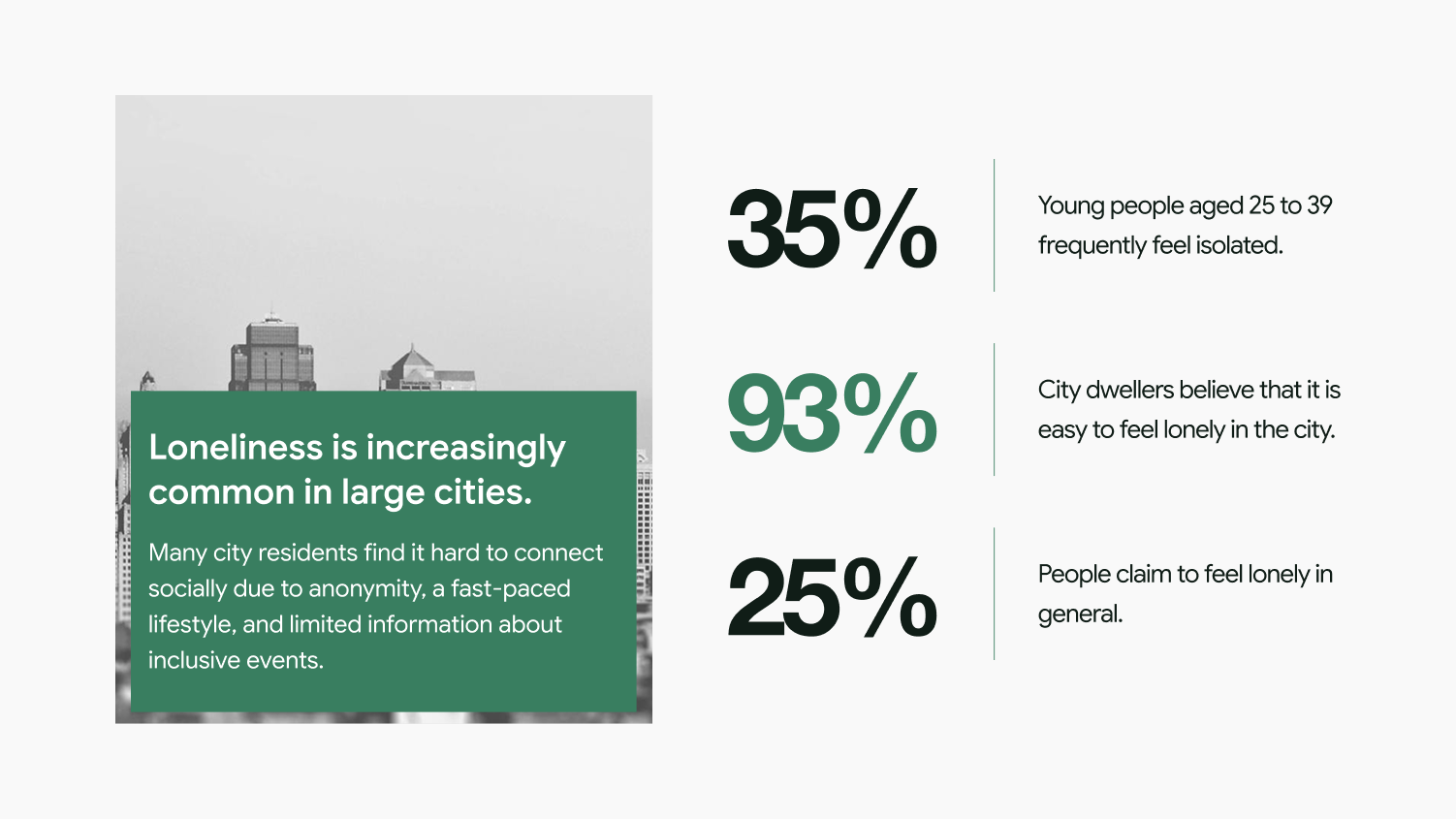
Despite the millions around them, many struggle to connect due to social anxiety, a frantic pace of life, and fragmented event information.
Problem
Urban isolation is not caused by a lack of events — it's caused by invisible barriers : social anxiety and unreliable accessibility information.
Core features
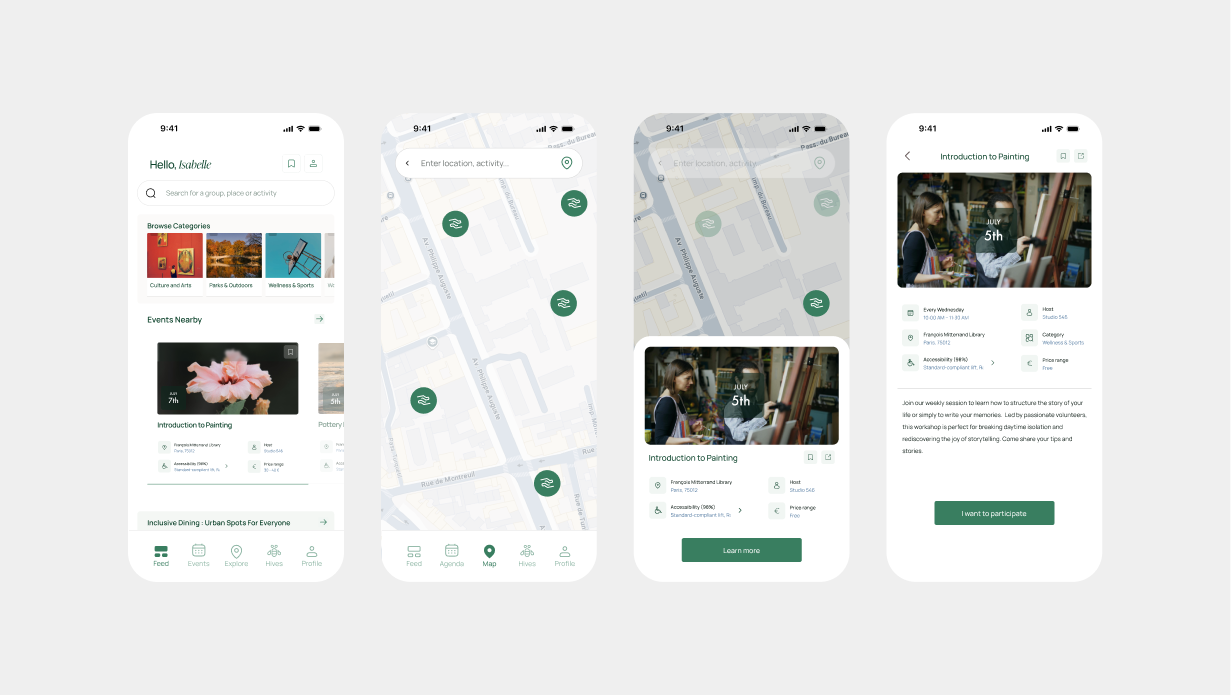
Personalised event feed · Inclusive interactive map · Co-pilot peer support system · Community "Hives" (groups)
OpenHive is a mobile app designed toprovide a single, trustworthy hub for urban discovery, it helps young professionals, seniors, and marginalized communities reclaim their social lives and connect with their city.
Target Users
Young professionals
People with disabilities
People in precarious situations
Accessibility standard
WCAG 2.2 AA/AAA
ARIA semantics
shadcn/ui + Radix UI
02
Problem
Through user interviews with young professionals, seniors, students, and people with motor and visual disabilities, four core friction points emerged — all pointing to the same root cause: the existing solutions are fragmented, unreliable, and not built for everyone.
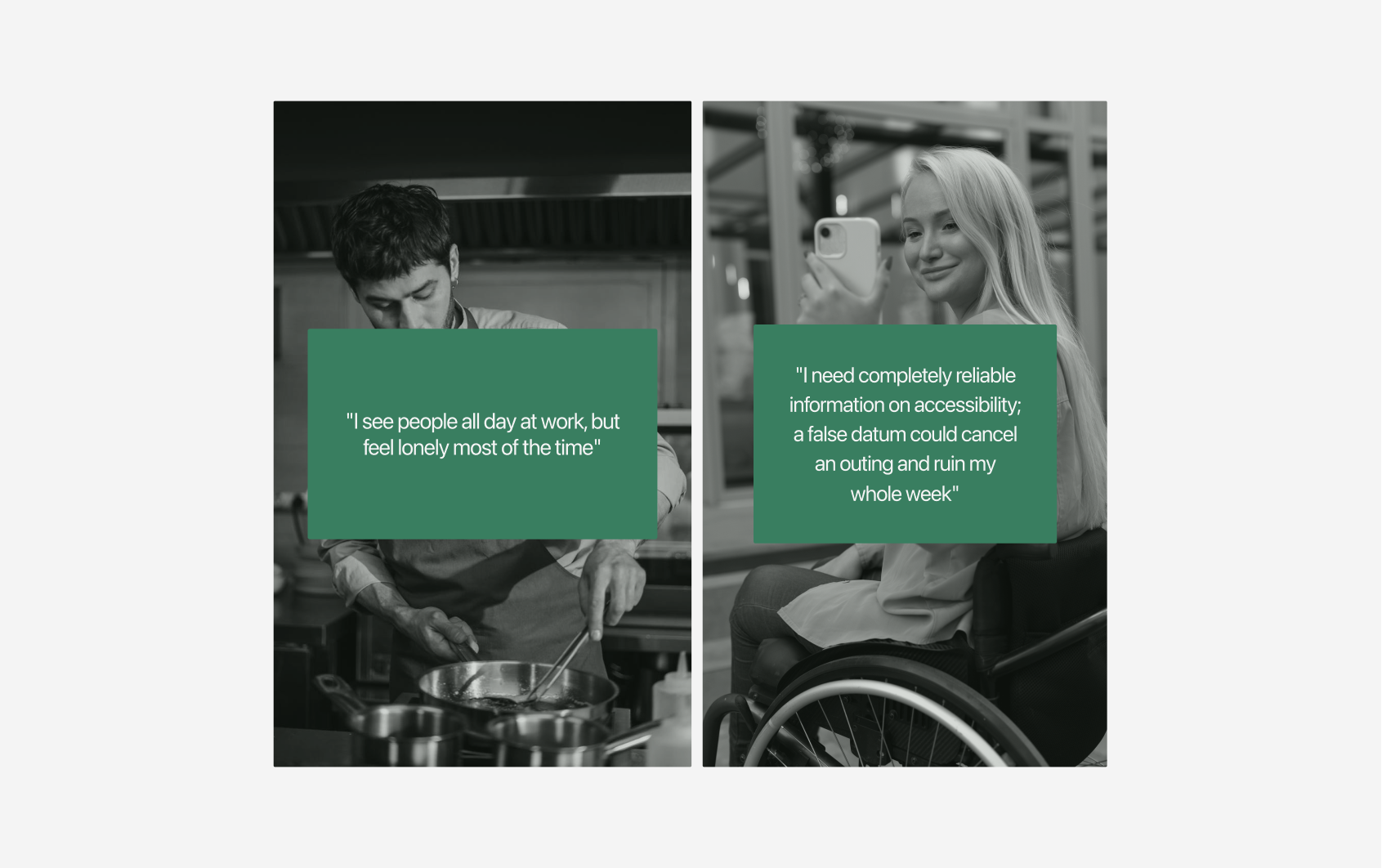
" I need 100% reliable accessibility data. Wrong information means a cancelled outing and wasted energy. "
Fear of the unknown
Users hesitate to attend events alone or interact with strangers, the fear of rejection and embarrassment creates invisible barriers.
Unreliable accessibility data
People with disabilities report that generic, unverified accessibility labels are the primary blocker to social participation.
Fragmented solutions
Users juggle multiple apps to find events, check accessibility, and meet people. No single inclusive, centralised solution exists.
Lack of authentic community
Beyond large events, users want niche, interest-based communities — not dating apps, not professional networks. Real friendship.
03
Process
01
Competitive analysis
Mapped the landscape of social apps (Meetup, Eventbrite) and dating platforms (Tinder, Hinge). The gap was clear : none combined genuine social connection with community-verified accessibility data.
02
Personas
Built two core personas: Antoine (28, developer, Paris, craving niche interest-based friendships) and Nadia (wheelchair user, consultant — blocked by unreliable accessibility data).
03
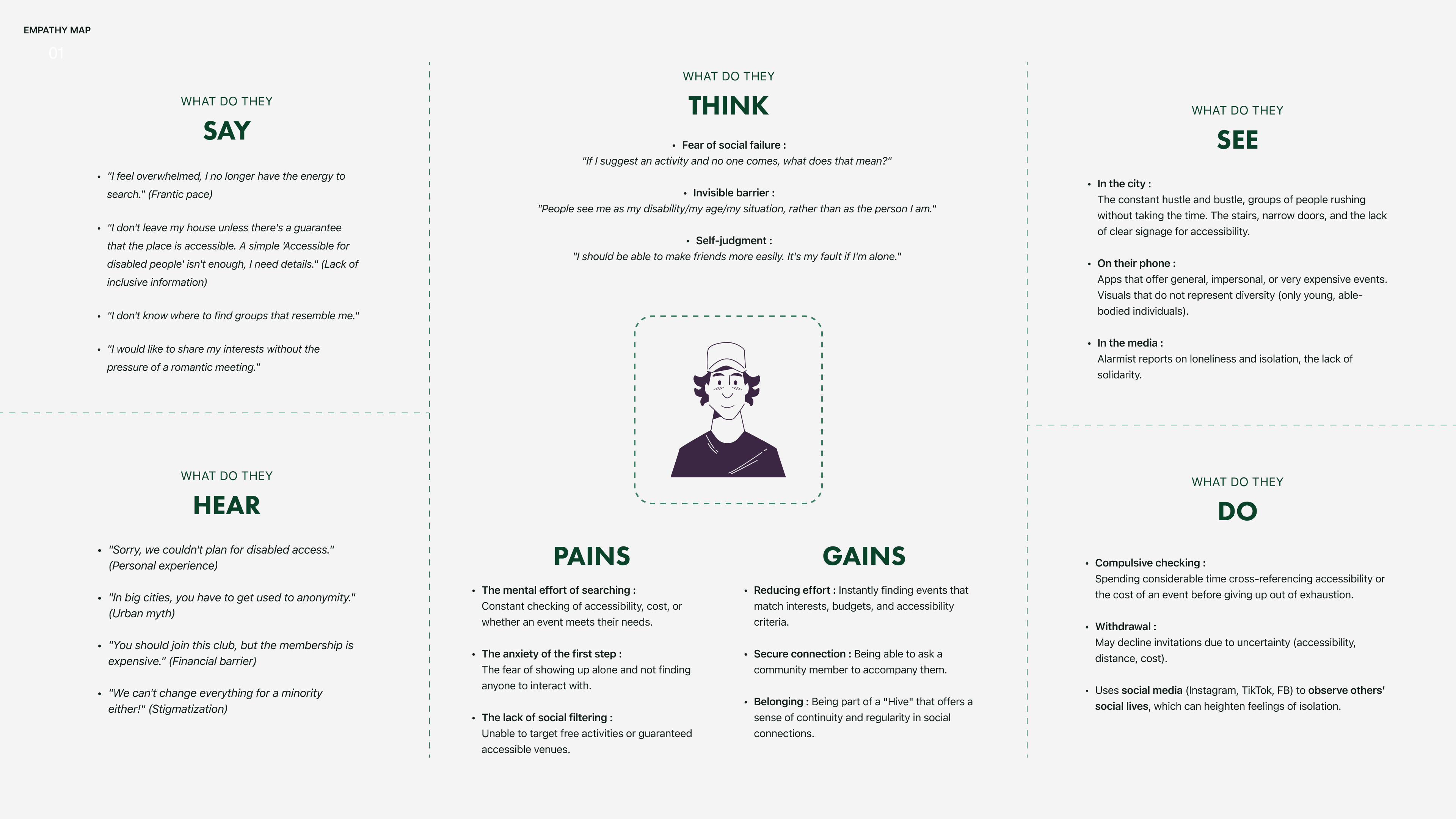
Empathy Map
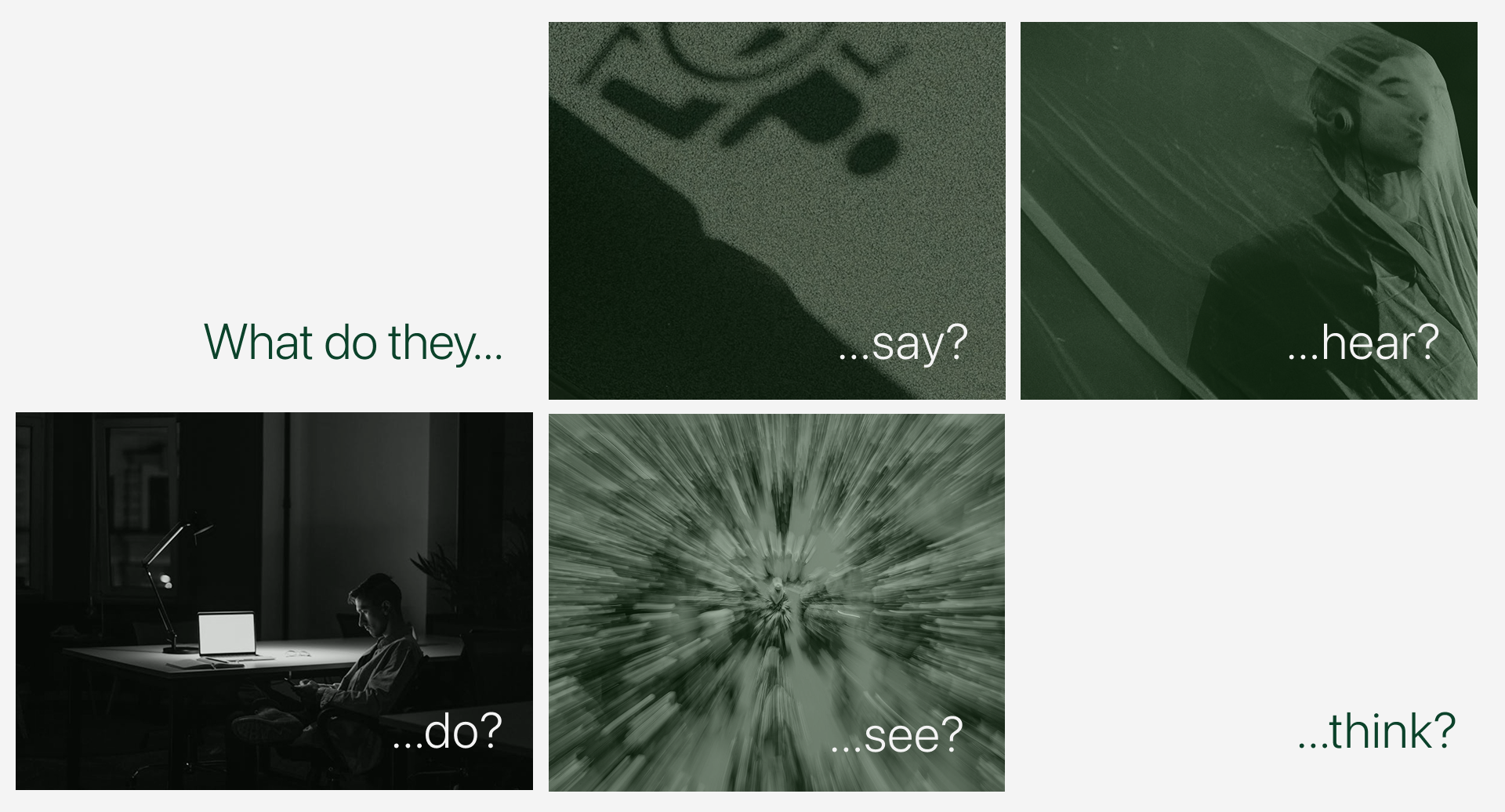
The empathy map revealed a shared emotional pattern : exhaustion from the research effort itself, long before any outing begins.
04
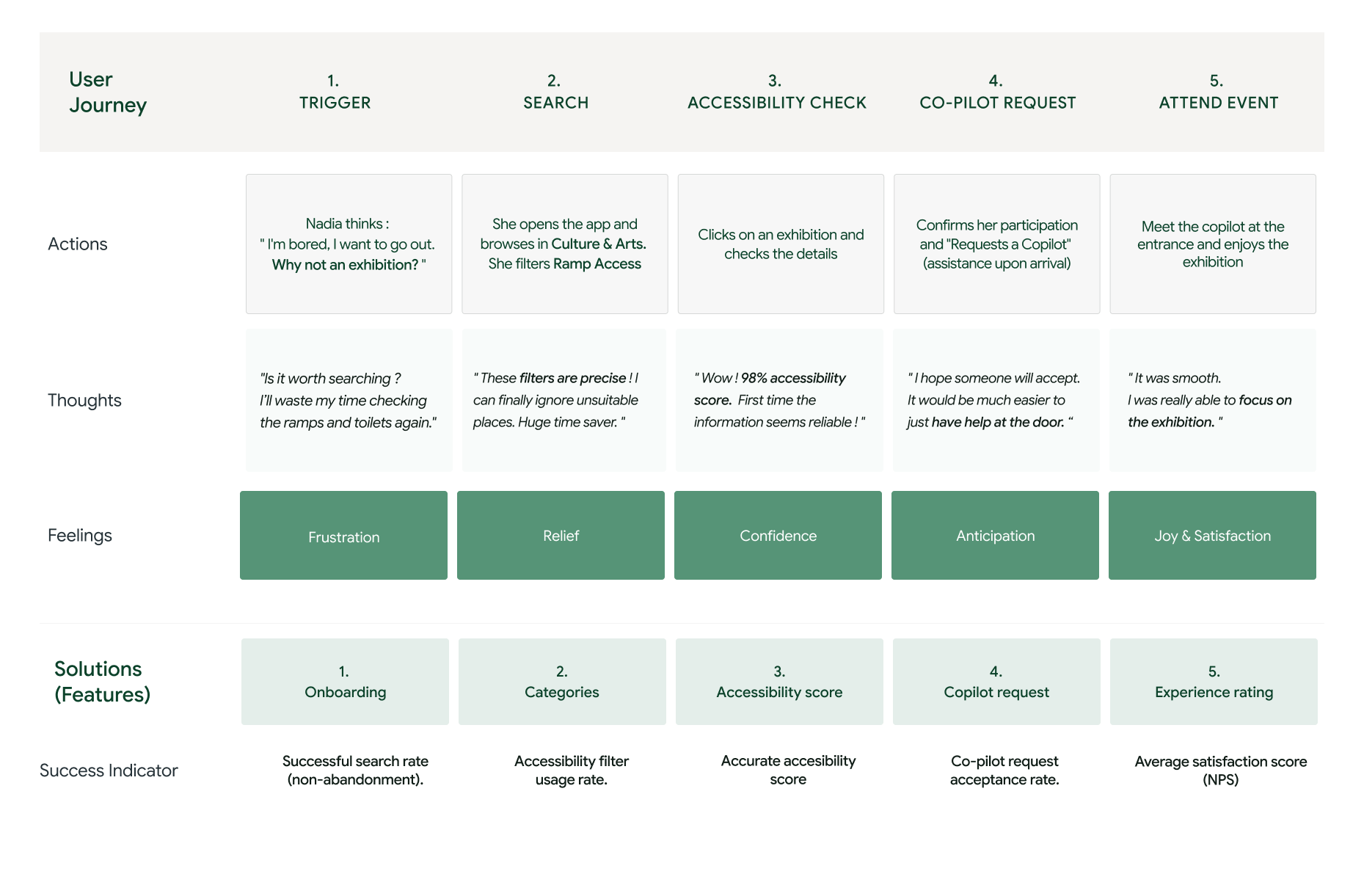
User journey & design system
Mapped Nadia's full user journey map and built a full design system using shadcn/ui + Radix UI for guaranteed accessibility compliance (keyboard navigation, screen readers) from the component level up. Applied the OpenHive brand — forest greens, WCAG AA/AAA colour ratios.
05
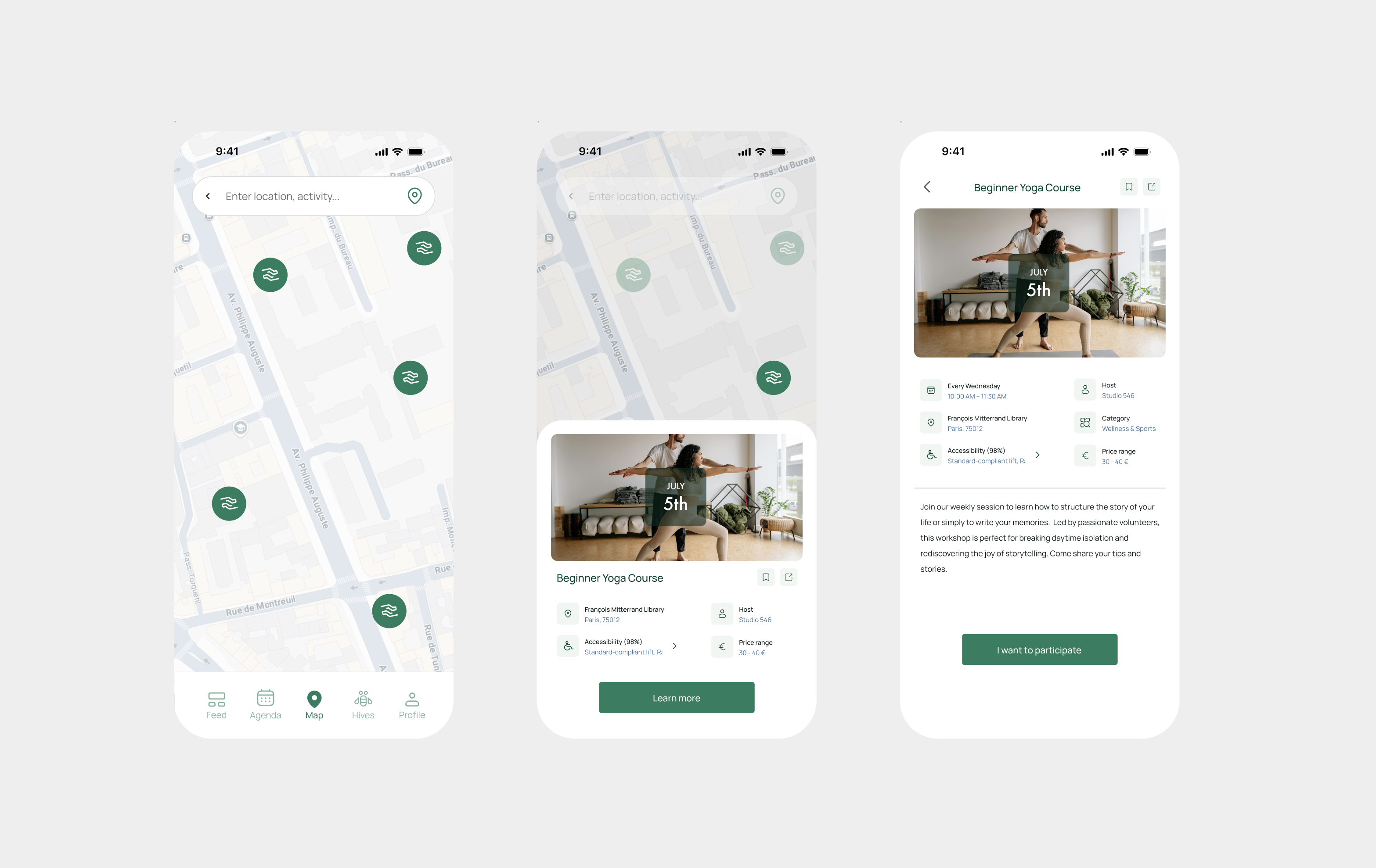
Interactive Figma prototype
Delivered a full interactive prototype covering both primary user journeys — Nadia's accessibility-first path and Antoine's community discovery path — with all Co-pilot interaction states, confirmation flows, and profile/settings screens.
04
Solution
OpenHive is built on two non-negotiable pillars: granular, community-verified accessibility data, and a human Co-pilot system that removes the anxiety of the first step.
Accessibility needs are captured at onboarding and permanently stored in the user profile, so Nadia never has to re-enter her requirements. Filters surface instantly as "My Accessible Places."
Feature 1
Accessibility-first event discovery
A personalised feed and interactive map that go far beyond generic "wheelchair accessible" labels.
Users filter by : ramp access, adapted toilets, calm lighting, sign language, soft sound levels, braille materials, all validated and rated by the community, not self-reported by venues.
Feature 2
The fellow co-pilot system
After confirming attendance at an event, users can request a co-pilot who is a verified community member who will meet them at the entrance. The request specifies the type of support needed : a welcoming presence, help with a door or step, being introduced to the group.
If no co-pilot has accepted within 1 hour, the system automatically sends an urgent reminder to trusted, regular community members ensuring no request goes unanswered.
Feature 3
Hives — interest-based communities
Groups organised around specific interests rather than geography alone. Book clubs, wheelchair basketball, Sunday hikes, accessible film nights. Antoine finds niche communities that match his real passions. Members build continuity and regular social rituals.
05
Impact
OpenHive is currently at the interactive prototype stage. The design demonstrates a socially and commercially viable product at the intersection of two underserved needs: genuine inclusion and authentic urban connection.
2
core user journeys fully prototyped and validated
WCAG AA/AAA
accessibility standard met at component level
4
friction points identified and addressed through research
Learnings
Accessibility as a strategic differentiator, not a compliance checkbox. Building accessibility-first from the component level (Radix UI) means every future feature inherits it automatically — no retro-fitting required.
The Co-pilot concept emerged directly from research, not ideation. Every interviewee — regardless of disability status — expressed anxiety about the first moment of arrival. The design response was human, not algorithmic.
Inclusive design is better design for everyone. Granular accessibility filters, persistent preferences, and friction-reduced onboarding benefit all users — not just those with declared needs.
Community-verified data beats self-reported data every time. The collaborative accessibility rating system — modelled on the trust mechanics of platforms like Airbnb — makes the data progressively more reliable as the community grows.